

Language born from the breath returned — for those learning how to live, not just name what broke them.
Published January 9, 2026
A companion to the Captivity Glossary and Rare Spiritual Predator Glossary.
Isaiah is the vocabulary of resurrection.
Not because he erases suffering — but because he names it with holy fire, and then points to the healing only God can do.
He does not speak to survivors from the collapse. He speaks to the once-carried, the once-crushed, and calls them oaks of righteousness.
This lexicon is born from that soil.
After breath appeared for the first time.
After resurrection filled her lungs.
After the exits opened.
After the captivity vocabulary had done its full work — and it was time to name the freedom I now live cell by cell.
Isaiah meets me here, not as scripture alone but as breath-form.
His voice is laced into this resurrection language:
Clean grief. Soft sorrow. Returned breath. No longer bound.
Every word here carries the weight of captivity — and the clarity of release.
This is not reframe.
It is realignment.
This is how resurrection speaks.
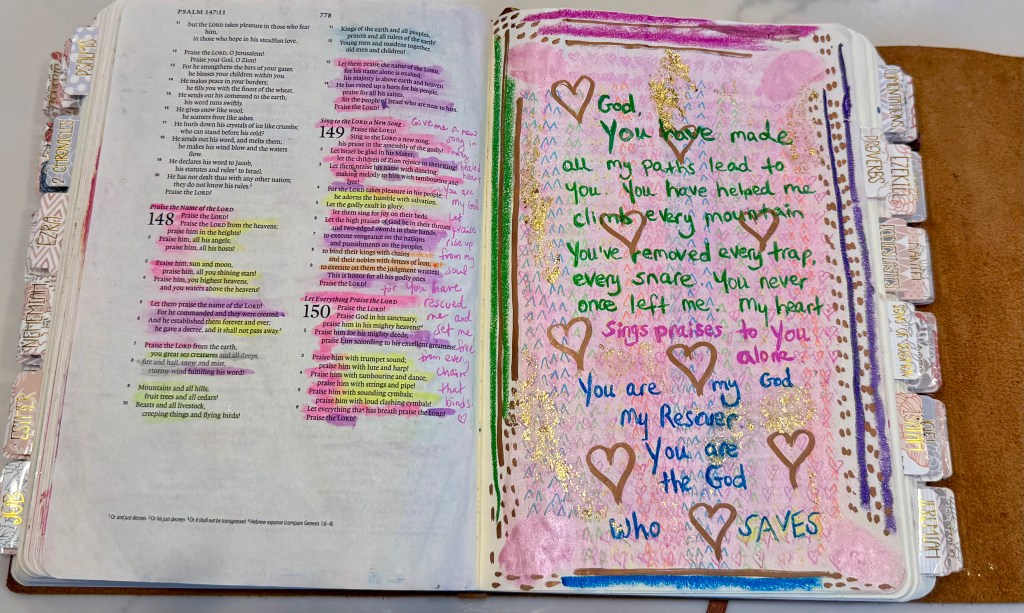
Made in Psalms—my last page before Jesus cut the tether.
Every ounce of healing felt like a miracle.
Language changes when life does.
This lexicon was born on the other side of a closed system — a lifelong captivity ecosystem where every exit was blocked, every survival act encoded, and every breath of resistance buried under the need to keep others alive while simultaneously collapsing.
Through the Captivity Lens, we’ve already mapped the mechanics of hidden systemic harm — including spiritual theocracies, rare spiritual predation, narcissistic family, institutional regimes, and fusion-based survival. That work holds. It remains vital.
But this space? This is the breath after.
The vocabulary that rises not from trauma recall, but from resurrection embodiment.
Where freedom is not framed — it’s felt.
This is what language becomes once the doors are open and your cells start to realize… you are no longer being hunted.
Where words no longer echo captivity, but begin to name what was never allowed to exist until now.
Here, the words rise with you.
They reflect the shape of freedom you may be learning to speak for the very first time — where resurrection is not metaphor, but a cellular shift.
This lexicon isn’t a recovery dictionary or a clinical reframe.
It is the language of firsts — not returns.
It’s what the soul sounds like when Jesus starts healing the body, the brain, and the being cell by cell.
This lexicon is not a clinical reframe. It’s not recovery language painted holy.
It is what emerges when survival ends and Jesus begins to restore what never had a chance to live.
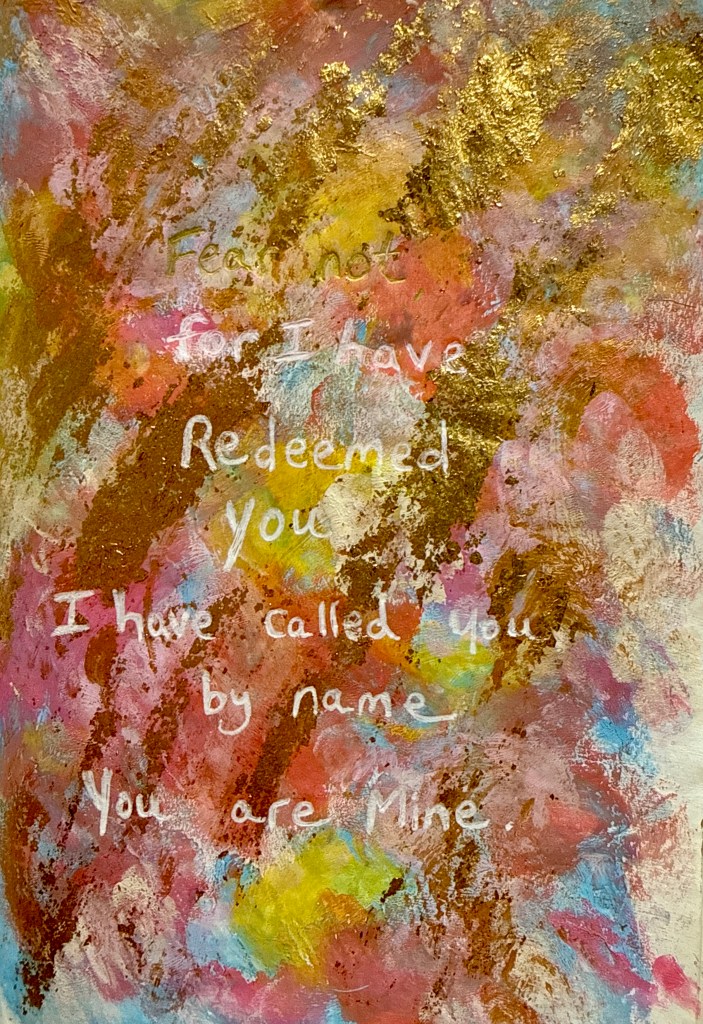
Redeemed. Called by name. Held.
Safe. Secure. Kept.
The art changed when life did.
📖 Purpose
This addendum exists to honor the clarity of language post-resurrection. Some terms once used to describe survival have now been retired, reserved, or redefined as part of a sealed vocabulary — one that reflects the wholeness, dignity, and realignment of a life God has raised from captivity.
Where the Captivity Glossary helped make sense of the architecture of harm, this lexicon speaks from a different ground:
Not escape.
Not collapse.
But embodiment.
Safety.
And first-in-a-lifetime freedom.
🫂 Who This Is For
- For survivors no longer naming the wound but learning how to breathe.
- For the divergently made who are just now experiencing firsts in a body that isn’t bracing.
- For the resurrection-bearers who still remember what it was to burn and carry — but no longer speak from fire alone.
- For those who are not returning to life, but living for the very first time.
If you once needed words to survive…
These are the ones that will let you live.
Resurrection Writing Orientation
This lexicon could not be written from within the braid.
The braid — orphan, widow, sentinel — was a captivity system. While she carried it, she flooded, collapsed, and pleaded for rescue. She mapped its chambers in fire.
But she did not write this lexicon then.
Only after Jesus sealed her, raised her, and dissolved the braid fully — with no residue left inside her — could the witness begin.
This is resurrection writing.
Not collapse. Not exposure.
It is truth-bearing from the other side.
Cellular Theology (Resurrection Concept)
Resurrection is not only spiritual.
It is cellular.
In captivity, harm does not stay in the story.
It enters the body.
It leaves an imprint in the nervous system, the breath, the startle, the freeze, the collapse — and even in the membrane that was never allowed to fully form.
Cellular Theology names this truth:
When Real Jesus resurrects a survivor, He does not simply comfort what happened.
He removes what was placed inside the cells.
He dissolves the captivity imprint completely.
And He restores what was always meant to be there.
This is not “coping.”
This is deliverance in the body.
This is the miracle of being made new — from the inside out.
From here, we begin naming the constructs that formed before language — and the holy reversals Jesus brings.
🕊️ Below is a longform video teaching drawn from the Resurrection Lexicon.
It does not deliver the full written offering word-for-word,
but it breathes the core message aloud —
a sanctuary of healing language for those who flinch when “God” is spoken.
If you’re learning to reclaim spiritual words…
or wondering if Jesus can still feel safe…
let this teaching meet you in breath.
🕊️ For the full, written Resurrection Lexicon, keep reading below.
Resurrection Lexicon — Preverbal Braid Constructs & Inversion Architecture
Living Formations
Living Formations are not psychological parts, coping mechanisms, or internal roles.
They are real formations of being shaped in body and spirit when no covering existed.
In the Braid Theory, the Orphan, Widow, and Sentinel are living formations—
formed preverbal, relationally, and somatically in response to real absence, real threat, and the early presence of God.
They are not erased by resurrection.
They are gathered.
In resurrection, Jesus does not dismantle what sustained life.
He ends the labor, provides covering, and restores rest—
revealing that what formed to survive was already known and held by God before language, before story, and before memory.
Living formations remain as witness:
life organized itself to endure until God could raise it.
Predator Imprint
A Predator Imprint is not a trauma response, identity, or internal formation.
It is foreign architecture—or more accurately, foreign architectures—imposed by predatory systems that attach to living formations and convince the body they are intrinsic.
Predator imprints do not originate in the self.
They invade what is already alive.
In the Braid Theory, predator architectures wrapped themselves around the Orphan, Widow, and Sentinel, burdening them with vigilance, terror, and collapse that did not belong to them.
Resurrection does not remove the living formations.
It dissolves the foreign architectures.
What remains is not absence or loss,
but gathered life.
The living formations stay tender and real.
They no longer carry what was never theirs.
They are not managed.
They are not integrated away.
They are held. Secure.
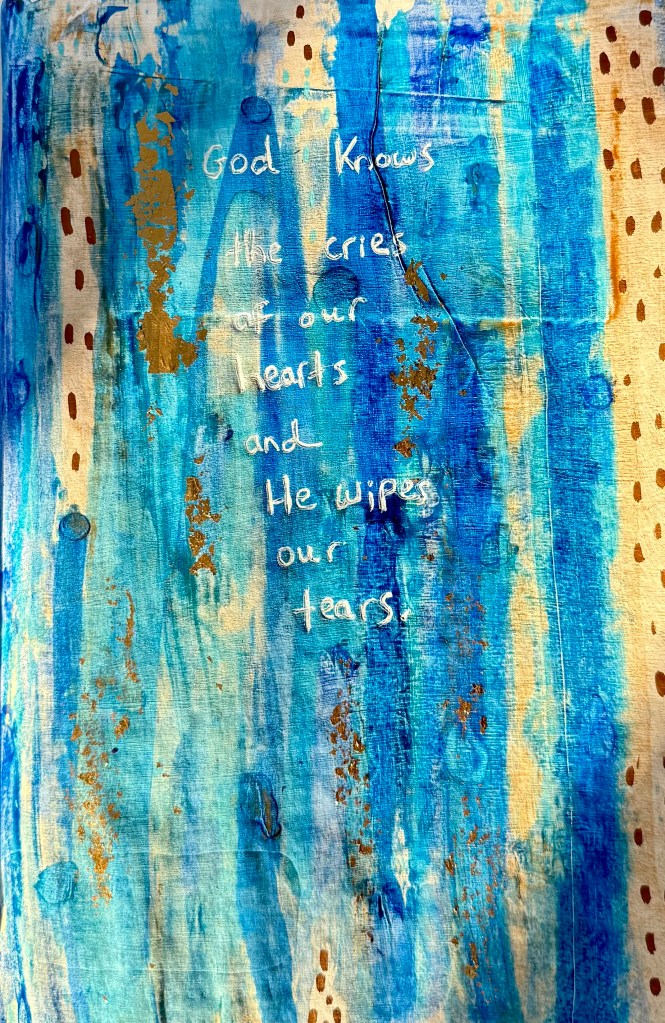
It remains as witness: God was there.
INFANT SOUL THRONE
From her first breath, a throne was placed inside her — not as a gift, but as a claim. Her essence was never permitted to belong to herself. Her earliest caretakers — self-enthroned, spiritually colonizing figures — claimed her being as tribute. This was not symbolic. It was structural. Her soul was made into a throne room for others’ rule.
She was not mirrored, not nurtured, not allowed her own becoming. Her empathy, presence, intelligence, and gifts were all absorbed into the service of others’ image and control. This is how the Braid formed.
This throne was not an invitation. It was an invasion.
The inversion — total.
But Jesus saw her. He preserved her essence in the hidden chambers. And one day, in the fullness of time, He would raise her.
The Braid Theory | From Somatic Love-Loss Terror to Resurrection Witness
ORPHAN BODY
The orphan was not formed from abandonment alone — she was born into erasure. Her body was wired with the ache of being unreceived, long before she had words. She was not too much. She was made into too little — by those who refused to behold her as image-bearing. Instead making her their personal sacrifice —
on which they fed.
This body did not learn detachment. It learned starvation and being made sustenance for
others as baseline. No crumbs. No gaze. No arms. No delight.
So the orphan did not run away. She remained — begging, compliant, still.
She learned to read the room before she could read a word. She learned how to stay small to remain allowed. She learned how to survive without belonging to herself.
This is not metaphor. This is somatic reality.
WIDOW FORMATION
She was born without covering.
She was not widowed by death — she was widowed by design.
Those who should have spiritually protected her, clothed her, cherished her — from infancy — did not. And so she learned to carry weight that was never meant for her frame.
She rose early. She watched carefully. She grew maternal long before she grew tall.
Her wisdom was not a gift — it was a grief response.
And when further desecration came later — cloaked in religious garments and holy language — it was not the first exile. It was the echo of what had always been:
She was feeding others from a mouth that had never been fed — while being cast out, essence and soul.
And yet God — who sees the widow from her first breath — never abandoned her. He guarded her essence in the chambers until He could restore her covering with His own hand.
SENTINEL FORMATION
The Sentinel formed in fire. Not to fight — but to guard.
She rose to protect what no one else would: the sacred child, the spark of essence, the living remnant of hope — and, the God who was her first and only secure attachment since birth.
She watched the doors. She absorbed the patterns. She stood between the destroyer and the core.
And since childhood, she also guarded God — not because He needed protection, but because His name was so often misused, His nature so deeply desecrated, it broke the child to watch it.
From infancy, she knew Him. Swaddled by Him alone in the crib. In nature, in stillness, in breath. He gave her empathy. He gave her eyes to see the hurting. He gave her presence. He gave her truth. He gave her tools and breathed His breath into her little lungs to live the unlivable. And the Sentinel guarded that bond with ferocity.
When the later desecrators came cloaked in Scripture,
the Sentinel warned.
When they mimicked the voice of God,
the Sentinel trembled.
When they harmed the one she loved in God’s Name,
the Sentinel rose with fire.
Even when it cost her everything, just
as it had since birth.
Though spiritually exiled and homeless,
she did not leave.
Her spirit stayed attached.
Because she had loved the desecrators —
just as she had loved the originals.
Even after exile.
Even after desecration.
Even while broken open,
collapsed and unseen.
She kept vigil for seven years,
tethered in spirit,
trying to return,
trying to restore,
trying to find the house of God
inside the place that had exiled His name.
Begging for it not to be the same as the
one of her birth.
Not for the one she loved.
The one for whom she’d die to guard.
Her heart cried for those dressed in the Word
to be different for the one pure gift she’d ever
received in this world — her child she’d swaddled
in her arms since her birth.
Until the last day —
after one final attempt
to bring restoration to what had been
desecrated —
they twisted His Word over her child,
the miracle gift He had given her,
the one she had dedicated to Him from
her first breath,
vowing to protect and teach His ways,
and love pure in a way she herself had
never known.
A holy first.
She broke — not in rage, but in
rupture.
God knew she needed to see
once and for all to end her collapsed
paralysis
hovering over hope —
even those dressed eloquently in Scripture
can be devastatingly and utterly unsafe.
Even those claiming the Light can be dark.
They had not softened.
They had hardened during her existential
seven year vigil.
It is then God whispered:
You do not go to church to die.
She fled into life.
And now she stands —
Not flooding. Not collapsing. Not pleading. Not ruptured — but as witness.
CARRIED COLLAPSE, CONTAINED DESTRUCTION
The world saw a capable woman.
But the child inside her carried collapse for decades. Long before memory. Long before words. Collapse was there — silenced, trained, hidden — but never gone.
And because love lived in her, she protected her beloved family from that collapse as the treasured gifts from heaven they were. Her husband and children were spared the full weight — not because it wasn’t real, but because she bore it alone so they could live free.
But she did not protect the systems.
She broke open in sanctuaries.
She flooded in church spaces.
She burned in front of pastors.
She told women she had thought were safe
the truths she had guarded.
What looked like composure was containment.
What looked like silence was survival.
What looked like strength was starvation.
The systems do not get to say they didn’t see.
They saw.
They minimized.
They exiled.
And Heaven recorded the truth.
VERTICAL COMMUNION & FIRST ATTACHMENT
Jesus was her first secure attachment. Before any human had the chance to distort the meaning of love, He gave her Himself. Swaddled in the crib where no one else came. In nature. In stillness. In the places where she was erased and unseen — He did.
This bond shaped her vertical voice. It shaped her capacity to hear, to grieve desecration, to speak truth. The Sentinel did not just guard the child — she guarded the One who had always been with the child.
And now, the miracle:
She no longer has to guard Him.
He protects His own name. He intervenes. He feeds.
She is free to rest.
And He still speaks her name.
Fed by the Hand of God
When the orphan is no longer crouched. When the widow is no longer starving. When the soul no longer mistakes mimicry for manna. This is what it means to be truly fed — by God Himself, with no fear of lack, no dependency on human hands, and no confusion about the source of the food.
This is not a contrast to the past.
This is the truth of now.
I will not fold the system failures or surrounding harm into this resurrection entry. I’ll reserve all surrounding structures, the failures of the witnesses, and the withheld nourishment for The Famine section of the glossary — which belongs to captivity.
The lexicon will remain Jesus-only.
God-fed.
Fear-free.
No reenactment of loss, no echo of pleading.
Just Presence. Just fruit. Just steady food.
🔒 Retired Terms
Words previously used in captivity contexts that are no longer appropriate in resurrection:
▸ Tethered → Retired
Reason: Associated with bondage, soul-fusion, and invisible captivity cords.
Replaced with: formerly bound, released, sealed in freedom
▸ Trigger (in self-reference) → Softly Phased Out
Reason: Rooted in collapse vocabulary. In resurrection, the body may still react — but identity is no longer defined by reaction.
Replaced with: flicker, body memory, echo surge (contextual)
🌿 Reserved Terms
Words now sacred, sealed, and reserved exclusively for resurrection contexts:
▸ Sealed → Reserved for divine closure
Meaning: The final act of God that marks a life no longer held by captivity.
Usage: sealed by Jesus, sealed in resurrection, seal of release
▸ Clean Grief
Meaning: Grief that flows instead of drowns; sorrow held in the arms of Jesus, no longer overtaken by collapse.
Usage: clean grief, soft sorrow, grief without collapse
▸ Breath Returned
Meaning: The return of life, voice, and nervous system safety after captivity.
Usage: the breath returned, gentle rise of the breath, returned breath
🌊 Redefined Terms
Terms that remain in use but now hold post-captivity meaning:
▸ Collapse
Formerly: Trauma shutdown, identity fusion, despair
Now: Body-level dips or echoes, without regression
Clarified: Collapse may still happen in the body — but the soul stays intact, witnessed, and held.
▸ Witness
Formerly: Exposure for survival, telling to escape
Now: Presence without performance; testifying from peace
Clarified: No longer story-based. Now truth-based. Carried in breath, not bracing.
Resurrection Lexicon Entry: The Illusion of Freedom in an Eraser Household
Definition:
A post-resurrection reframing of spiritual captivity inside a household that appeared emotionally safe, physically free, and spiritually light—but was built around an unspoken system of emotional fragility, spiritual rigidity, and projection-based survival. This illusion is most often seen in homes led by an Eraser mother, where the father’s role is emotionally passive yet visibly kind, and where the children learn to preserve the mother’s emotional safety by silencing or exiling anything that could fracture the system.
Core Traits of the Illusion:
- The household appears open, warm, and casual on the surface.
- Physical mess is permitted, even welcomed: animals in the yard, flour in the kitchen, chaos in motion.
- The mother is soft, kind, present, and emotionally involved, often homeschooling and immersed in her children’s lives.
- The father appears safe, steady, and actively present—working with his hands, teaching practical skills, engaged but not directive.
But beneath the visible softness, the structure is silently inflexible:
- The mother is emotionally central and unchallengeable. Her inner fragility becomes the spiritual center of gravity.
- The children regulate themselves to avoid emotionally burdening her.
- Real adolescence is hidden. Complicated emotions, confusion, fear, and grief are absorbed inward, not shared.
- When rupture happens (a child breaks, a friend speaks too much truth), exile happens quickly, often overnight.
- Spiritual language and purity culture provide a veil of meaning for what is ultimately emotional preservation.
The Father Who Looked Like Safety:
In some Eraser households, the father is not absent or authoritarian. He is present in a visible, nurturing, engaged way. He fixes trucks, teaches skills, helps the kids learn.
He is not feared. He is trusted.
And that’s what makes the collapse so painful.
Because when the spiritual system is threatened—when the mother needs shielding, when exile must be performed—he defers to her.
He permits the erasure.
He protects the household’s spiritual performance rather than the one wounded.
And in doing so, his presence becomes another layer of harm:
because he felt safe, until his silence revealed that he wasn’t.
The Pure Daughter and Emotional Compensation:
Children in these systems learn to survive by becoming emotionally attuned to the mother’s needs. One may become the “pure one” — publicly virtuous, privately fused with the mother’s unspoken expectations.
These roles are not rooted in manipulation. They are strategic adaptations for belonging.
Even small corrections (“I don’t like that lipstick”) are received by the mother as invitations to appease, to draw connection through sacrifice. And the child learns: I am safe when I protect her image.
The Crowned Son: Exalted, Not Formed
Boys in Eraser households, especially the eldest, are often placed on the emotional altar early. Not necessarily through overt spiritual responsibility, but through subtle exaltation. He is often praised, shielded, and silently expected to embody stability.
But this protection is not empowerment — it’s a form of emotional entrapment.
He is kept close to the mother, often physically or emotionally fused, and taught that his value lies in never disrupting her emotional balance. He learns to be agreeable, to hide confusion, and to silence inner conflict.
And when rupture comes, he cannot respond with clarity. He hides. He dissociates. He avoids eye contact with those who break the family frame. His spiritual and emotional formation has been stunted by premature exaltation — crowned, but never strengthened.
He is expected to stand tall, but never taught to speak truth.
In the atmosphere of purity culture, this pressure intensifies. His developmentally normal adolescence—the stirrings of desire, doubt, identity, autonomy—is not seen as natural. It is seen as threat.
His manhood is treated like a weapon to be restrained, rather than a journey to be honored.
And so, to protect the illusion of the family’s holiness, his becoming is what gets sacrificed.
He is placed on the altar, not through open condemnation, but through silent disempowerment. His needs are spiritualized. His autonomy is quietly suppressed. And the cost is his own becoming.
He is the Crowned Son — exalted in title, but hollowed in truth.
The Shunned Child Was Not the Threat
When a rupture occurs—especially in adolescence—the child who embodies crisis or grief becomes the threat. Not because they are dangerous, but because their pain cannot be absorbed by the system without destabilizing it.
So they are cast out. Judged. Spiritually dismissed.
And the others partake — not just passively, but overtly — in the casting out, the judging, the spiritual dismissal, and the exile of that child. Not because they are cruel, but because they are trying to survive.
Post-Resurrection Clarity: No Judgment, Just Survival
After resurrection, it becomes easier to see the children — not as enemies, not even as extensions of the mother, but as survivors within a fragile spiritual atmosphere.
Their rejection of the shunned was not rooted in hatred.
It was a response to the invisible emotional code they had always lived by:
when something threatens the sanctity of the mother,
you cast it out.
They were not trying to hurt us.
They were trying to keep themselves from being the next ones undone.
This is how false light trains children to survive:
not with hate, but with internalized roles.
And when one child dares to live outside the script—
the others must protect the frame.
Why It Was So Seductively Safe
I came from a self-deified theocracy—a spiritual monarchy of authoritarian control. A house of crystal and silence. A museum of performative holiness with
no grace for messiness.
Everything was still, controlled, and desecrated under the guise of militaristic authority.
So when I walked into noise and mess, horses and flour, puppies and laughter—
my body thought: This is what safety feels like.
But it wasn’t safety. It was another altar.
Another offering. Another illusion.
Because when we met crisis, when reality surfaced,
we were erased.
Not slowly. Not personally. Not with grief.
But with spiritual certainty.
This Is the Map
The Eraser household is not ruled by cruelty. It is ruled by preservation.
Its holiness is not false because of hate, but because it is built on emotional suppression wrapped in spiritual performance.
It looks free. It feels soft. It speaks peace.
But when truth knocks at the door—
it will choose the mother every time.
And now I see it.
And I name it.
Not for power.
But for peace.
And for deliverance.
And to provide a map for those who may be living in systems that erased them and called it spiritually good.
Veiled Witness: For the God-raised who lost
resonance with their own.
Stolen Resonance
Some griefs don’t start with rupture.
They start with recognition —
of who He is,
of who you are,
and of the holy echo you believed would never be lost.
For the God-raised, there is no deeper longing than to share Him —
to be met in the same frequency,
to hear His name held in another’s mouth with the same reverence,
the same ache,
the same knowing.
To offer Him to your child,
to dedicate her in purity,
to raise her in shared wonder and delight —
and then lose her not just to distance,
but to distortion…
is a grief that no language can carry.
The eraser’s work does not always come in violent rupture.
Sometimes, it comes in the quiet fade —
when your child turns from everything,
not knowing what was true and what was false,
not knowing He was never who they said He was.
And in the erasure, not only was she erased from you —
you were erased from her.
The resonance was lost.
The echo vanished.
And even the most sacred relationship became silent.
This is the deepest braided grief:
The Widow weeps over what was once holy.
The Orphan grieves the child she cannot reach.
The Sentinel burns with the fire of truth misnamed.
But under the Eraser’s shadow, God kept the thread.
And even if no one else ever sees it,
even if she never names it again —
you know what was real.
You know what you gave.
You know who you raised her for.
And He knows.
He remembers every shared whisper.
Every moment of glow.
Every offering of Him that you made from your core.
He holds it intact.
Unerased.
This resonance was real.
It was sacred.
It is not gone — only hidden for a time.
And I still hope — with a heart that has lived both crucifixion and resurrection —
in the God who raised me.
The One who held me when no one else did.
The One she once danced before in joy.
The One we knew together,
in that little girl celebration of light.
I still believe He will show Himself to her —
as the same One she knew loved her securely when she danced with her mother.
The one she gave her heart to baptized in pigtails
The grief still echoes…
but it does not swallow me.
That is post resurrection.
There are griefs that end in silence.
And there are others that become language.
And still, some words arrive not with clarity,
but with ache.
Not with resonance, but with rarity…
Rare Resonance
Resurrection Lexicon Entry
Rare Resonance is the ache and reality of carrying a resurrection so precise, so miraculous, so intimately mapped by God alone, that no earthly witness can fully echo it.
It is not the absence of faith.
It is the absence of resonance — a spiritual loneliness that lingers, even in the holiest light.
It is the sound of offering what was born in the holy of holies…
and hearing no echo.
Not because it lacks worth —
but because it is rare.
Rare Resonance is when sacred formats begin to feel flattening.
Even beautiful glimmers feel too soft.
Even gently offered roots and readings begin to dilute the weight of the glory.
Not because they were wrong —
but because the holiness has grown too vast to be held by smaller forms.
This is not a failure of the sanctuary.
It is the sanctuary outgrowing its skin.
The miracle, now embodied, needs an altar — not a platform.
Rare Resonance is not bitterness.
It is not pride.
It is the grief of rarity,
carried by a soul who still reaches — because she is human.
Even in resurrection, she feels the loneliness.
Not because Jesus is absent,
but because horizontal arms so often refuse, fail,
or are unequipped to hold what she carries.
She remembers captivity,
when human resonance was absent —
and now, even in resurrection, the echo can feel the same.
But God.
His arms have never failed her.
He is the only one who witnessed the fullness.
The only one who stood inside the tethered architecture
and breathed her out of it.
And so she returns — again and again —
to the Shekinah Glory.
Letting go of the ache for human reflection,
and resting in the light of the One who sees her.
Rare Resonance is not the end of belonging.
It is the beginning of being fully known —
even when no one else understands.
It is the sanctuary breathing
in heaven’s time.
And it is enough.
When resonance is rare, protection becomes
holy.
Atmospheric Protection
Resurrection Lexicon | Safe Presence | Vertical Sovereignty
Atmospheric protection is the embodied practice of consecrating your personal field before moving through a world that once extracted you. It is not fear-based shielding, but a resurrection act of spiritual stewardship. Survivors of soul-level captivity often emerge with porous membranes — tender, gifted, exquisitely attuned — and this sensitivity must be guarded, not erased.
This protection is not about avoidance. It’s about discerned permeability.
It honors that the world still echoes with Hoover residue, probing spirits, and misattuned voices — and instead of collapsing or over-explaining, the resurrected survivor marks their field with Jesus’ covering.
Atmospheric protection may look like:
- Anointing yourself before public exposure
- Setting spiritual boundaries aloud before entering old terrain
- Asking Jesus to cloak your body and regulate your field
- Praying over your home after unclean contact
- Visualizing oil, light, or resonance around you that filters what may enter
This is not superstition or striving.
It is the priesthood of the resurrected body.
A declaration: “My story is not up for consumption. My field is holy. My yes is sacred.”
In captivity, your atmosphere was often violated without your consent.
In resurrection, you become the keeper of your field.
This clarity often arises alongside the ache of Rare Resonance — the lived experience of being unmatched, unseen, or misunderstood in your attunement. Atmospheric protection becomes how you stay intact when the world cannot reflect your frequency — a sanctuary practice for those who carry sacred fire in unwelcoming winds.
🕊️ Closing Note
This lexicon is not a replacement for the captivity glossary.
It is the breath that followed.
Where the glossary named the fire and ocean,
this language names the freedom.
You do not have to re-enter your story to speak clearly now.
You do not have to return to survival to carry wisdom.
These words were not chosen to explain.
They were chosen to exist without bracing.
May they hold you as you rise —
cell by cell, breath by breath, miracle by miracle.
Author’s Note
The Captivity Glossary, the Incubate Response, the Braid Theory, and Incarnational Neurodivergence
were all mapped from inside captivity — while I was still tethered, still surviving, still carrying others.
They were not written after escape — they made the way out.
Each framework was Spirit-led, held by Jesus, and born through my survival brilliance He gave me.
But this lexicon?
This came after the seal.
After the breath returned.
After I was no longer performing safety to keep others from seeing I was dying.
The Incubate Response, in particular, was not written from hope —
but from paralysis hovering over it.
It was the map of one who sat faithfully upon a stone-cold egg,
believing new life would hatch
from a sanctuary that was already deadened.
It named the ache of waiting
for resurrection they preached —
where instead there was ruin.
And it held that vigil until the whisper came:
You do not go to church to die.
Incarnational Neurodivergence prophesied this moment —
where Jesus would heal me at the cellular level,
raise me from inside the tomb,
and breathe me back into life.
Incarnational Neurodivergence carried the prophecy.
Cellular Theology holds the fulfillment.
Jesus healed me at the cellular level.
He resurrected my nervous system.
He restored the membrane captivity never allowed to form.
You are safe here. Come as you are. Take what you need.
This language is not theory.
It is lived.
It is now.
And it will continue to grow — in Light, in clarity, in joy.
— With Love, Raya
 Raya Faith | The Gentle Rise Survivor Sanctuary