

Neurodivergent Glossary (ADHD, Autism, AuDHD, Sensory, Gifted)
Published July 21, 2025
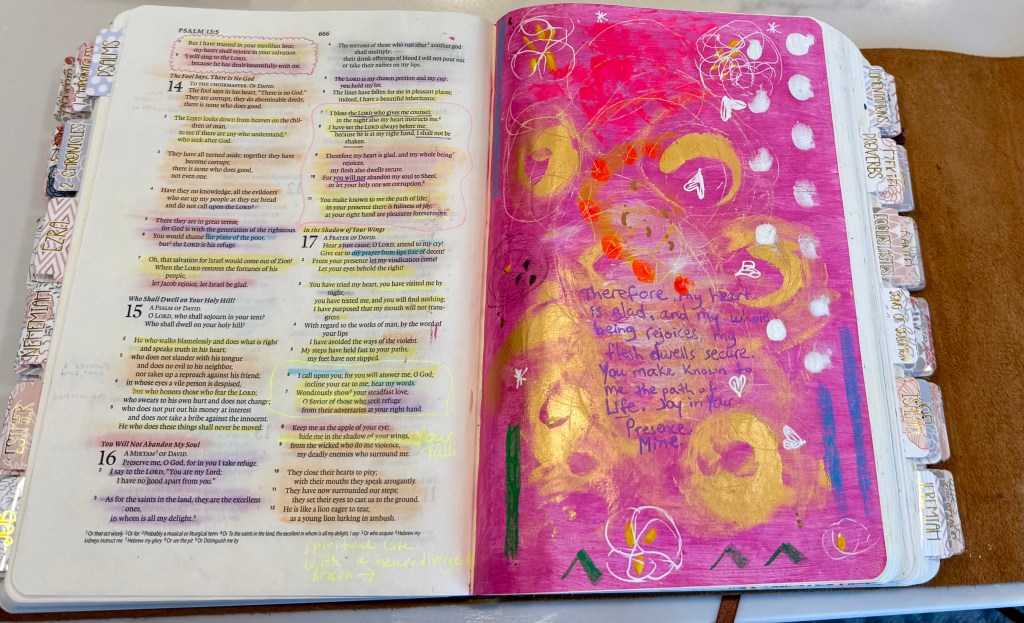
This was my first doorway into understanding myself while still in captivity.
It’s where I began reaching for my inner child and bringing her out of the dark.
In ways I couldn’t yet see, she was already reaching back.
That revelation belongs to another day.
You are not too much — you are just newly named.
The traits you were taught to hide are often the very evidence of your brilliance.
You were made on purpose, for purpose — in this exact wiring.
This is a gentle welcome into understanding your neurodivergent wiring with grace, not overwhelm.
You are, indeed, fearfully and wonderfully made.
Whether you’re newly discovering or slowly remembering who you’ve always been, these words are here to help you name what was never broken.
🌱 You can explore more reflections on AuDHD survival brilliance in the full video playlist here.
A gentle note:
This is a starter glossary, tenderly gathered for those newly discovering their neurodivergent patterns — especially in midlife, where so much is finally being named.
We’ll be expanding this glossary with time, care, and inclusivity. For now, may these words serve as soft stepping stones — reminders that you are not broken, strange, or too much.
For those who need to hear it aloud —
this is one of the most loved reflections on AuDHD survival brilliance.
It names the sacred wiring beneath what others called too much.
A breath for your nervous system. A mirror for your heart.
The glossary continues below, for those who want to keep exploring — one spark at a time.
I am stepping right along with you having newly discovered them myself. Not ahead, but beside you. Here, there is grace for the figuring out alongside.
We were made on purpose, for purpose, this way.
And you are not alone.
1. Neurodivergent
A broad term that simply means: your brain processes, responds, and perceives the world differently than what society calls “typical.” This includes ADHD, autism, learning differences, sensory sensitivity, and more.
2. AuDHD
A blend of Autism and ADHD traits in one person. Often underdiagnosed, especially in women and late-diagnosed adults. These individuals are both deeply attentive and distractible, intuitive and detail-driven — often masking without knowing it.

I didn’t know this term until well into my healing journey. I just knew I was exhausted, misunderstood, and “too much” in every room. Naming it helped me stop blaming myself for how I’m wired.
3. Masking
The act of hiding your true traits or needs to appear “normal” or acceptable. Often learned in childhood as a survival strategy. Can feel like chronic performing, exhaustion, or confusion about who you really are.
I didn’t even realize I was masking — I just thought that being “liked” meant disappearing. The masks you wore were armor. You’re allowed to take them off now.
Masking as Survival / Fawning as Disappearance
When adapting becomes erasure
Definition:
Masking is the conscious or unconscious effort to hide one’s natural neurodivergent traits in order to appear more “acceptable,” “capable,” or “socially appropriate.” It can include mimicking tone, forcing eye contact, smiling on cue, rehearsing responses, or suppressing stims and sensory needs.
In many autistic and AuDHD individuals, masking begins early — as a form of safety, adaptation, or even love. But when complex trauma is layered on top, masking becomes fused with fawning: the trauma response of appeasing, overperforming, or people-pleasing to avoid conflict or abandonment.
This fusion often goes unnoticed — because from the outside, the person looks “high-functioning.” But inside, the cost is immense.
Signs of Masking-Fawning Fusion May Include:
- Over-apologizing for normal needs
- Smiling through distress
- Agreeing automatically, then collapsing later
- Mirroring others to feel safe or invisible
- Adapting tone, language, or beliefs depending on who’s in the room
- Feeling like no one knows the “real you” — not even yourself
 Masking (Neurodivergent Context)
A survival strategy — not a manipulation.
Definition:
In the neurodivergent experience — especially for autistic, ADHD, AuDHD, or otherwise sensitive and intuitive people — masking refers to the often-unconscious act of camouflaging one’s natural traits, needs, or expressions to avoid judgment, rejection, punishment, or abandonment.
This can include:
- Forcing eye contact even when it’s painful
- Rehearsing scripts to mimic neurotypical conversation
- Smiling when overstimulated or shut down
- Suppressing stimming, sensory needs, or authentic reactions
- Overperforming “normalcy” to be accepted in school, work, or church
Masking is not about deception — it’s about protection.
It’s what happens when your safety depends on making others comfortable with your existence.
Over time, masking can lead to:
- Autistic burnout
- Identity confusion
- Extreme fatigue
- Emotional disconnection
- Delayed realization of one’s true self
It is not “faking.” It is survival.
I grew up in a whole narcissist home. I know the difference. When I entered The Church at 24, I believed I was protected, safe to be my authentic self. For all the sparks mentioned above, I believed with all my heart I could finally let go the mask of survival around anyone who claimed Jesus in their heart. Jesus who had changed mine from the inside out in one night. This set me up for the biggest re-traumatization’s of my life. I may never regain the trust I once had for The Church. But I am learning to trust Jesus with whom I no longer have to mask.
 A Note on Language: Not All Masking Is the Same In your Trauma Glossary, masking is also used to describe narcissistic behavior — where someone intentionally hides harmful motives, manipulates perception, or curates a false self to maintain power or avoid accountability. That kind of masking is rooted in deception and control.
Neurodivergent masking is different.
It is not used to gain power — it’s used to avoid harm.
Here’s the contrast:
| Trait | ND Masking | Narcissistic Masking |
|---|---|---|
| Origin | Survival, protection | Manipulation, control |
| Intent | To be accepted or safe | To deceive, dominate, or hide true motives |
| Energy Source | Often unconscious or automatic | Often calculated and strategic |
| Impact on Others | Invisible exhaustion, people-pleasing | Distortion, betrayal, confusion |
| Impact on Self | Burnout, identity loss | Inflated false self, fragility under exposure |
Understanding this distinction is crucial — especially for neurodivergent trauma survivors who may have internalized shame for “not being authentic” when in reality, they were masking to survive spaces that never made room for their true self.
 Gentle Reminder:
If you had to shrink, script, or silence yourself to stay safe — that was not a flaw in you. That was a flaw in the space. Your masking was never manipulation. It was an act of endurance. And you are allowed, now, to unmask slowly, gently, at your own pace.
Trauma Deepens the Disappearance
When trauma survivors mask, they’re not just trying to fit in — they’re trying to survive relational harm.
They may have learned:
- Authenticity leads to punishment
- Quietness keeps the peace
- Over-functioning earns love
- Emotional invisibility prevents rejection
So masking isn’t optional. It’s wired in.
And eventually, it becomes a disappearance —
not just from others, but from the self.
The Aftermath
Many survivors don’t realize they’ve been masking + fawning until they burn out completely.
They may say:
- “I don’t know who I am anymore.”
- “I’m exhausted and no one sees it.”
- “If I stop being who they expect, will I still be loved?”
The mask is heavy.
The fawn is lonely.
The performance is unsustainable.
Gentle Naming:
You are not dramatic.
You are not fake.
You are not wrong for needing safety.
You learned to protect yourself —
with brilliance, with care, with deep, deep love.
And now, you get to return.
Not to the expectations, but to yourself.
Bit by bit, breath by breath,
you are allowed to unmask.
You are allowed to unfurl.
4. Sensory Overload
When your nervous system becomes overwhelmed by too much input — lights, sounds, smells, touch, or internal stress. Not picky. Not dramatic. Just deeply affected by stimulation others might not notice.
You notice what others dismiss. That sensitivity is sacred.
It’s amazing what healing does. Now that my nervous system isn’t in chronic survival mode, I am now keenly aware of my actual sensitivities. I no longer dismiss them. I protect my still healing nervous system from unnecessary stimuli.
5. Hyperfocus
A common ADHD trait where you become completely immersed in a task or topic — often losing track of time or basic needs. It’s not “focus on demand,” but a deep, joyful tunnel of attention.
I did not have the language for what I experienced as a younger mother. I knew I never wanted my children to feel a burden or a nuisance. I love them deeply. I shoved my creativity in a box to protect them from what I now know to be my hyper focus which can be painful to transition out of when I am deep into my creative tunnel. This all-or-nothing approach left me with depression. Untreated, of course. Now I would encourage my younger self to get the help she needed with transitions so she could keep using her God-given gifts and still be a loving mother.
6. Time Blindness
Difficulty sensing the passage of time. “A few minutes” could be two hours — or two days might feel like one.
This is neurological, not laziness.
7. Rejection Sensitivity
A strong emotional reaction to perceived criticism or social exclusion. Often linked to RSD (Rejection Sensitive Dysphoria) in ADHDers. Not a character flaw — but a tender bruise on the nervous system.
Even a gentle correction can feel like abandonment. When you have Complex PTSD this is for good reason. I write about this in When Rejection Feels Like Fire.
You’re not “too sensitive.” You just feel deeply.
8. Giftedness (Adult)
Not about grades or talent — but intensity, complexity, emotional depth, and existential questioning. Many gifted adults never knew they were gifted, only that they felt “too much.”
I spent so long thinking something was wrong with me because I couldn’t turn down the volume of my thoughts, intensity. Learning of my Adult Giftedness was the first breakthrough into my neurodivergence. I sat with the assessment on my lap with tears pouring down my face.
You were never “too much.” You were full of spark.
9. Special Interest
A deep, focused, and often lifelong area of passionate curiosity — common among autistic individuals. These aren’t “hobbies” or “quirks,” but sources of joy, identity, and comfort. Immersing in a special interest can soothe overwhelm, restore energy, and help make sense of the world.
Your passion isn’t too much. It’s a sanctuary your mind built to feel safe. And it is what helped save my life.
And it’s beautiful.
10. Alexithymia
A difficulty in identifying, describing, or accessing one’s emotions.
Not a lack of feeling, but a fog between knowing and naming.
It can feel like being locked out of your own heart — where the emotions swirl beneath the surface, but the words never arrive.
This is not brokenness. It is often a nervous system in protective mode, especially common in autistic individuals navigating overstimulation or trauma.
How can you ask for help when there are no words to explain? I went untreated for complex trauma for nearly half a century. Way too long for one nervous system to endure. I want to be a voice for others to take these words into therapy saving I pray decades of needless suffering. Language changes everything. The key to open doors for self-compassion and healing – to be seen, helped. Priceless. The cost of no words far too high for too many beautiful souls who deserve to simply be, live understood.
11. Autistic Meltdown
An intense neurological response to overwhelm — not a tantrum, not attention-seeking, but a release when the system can no longer contain sensory, emotional, or cognitive overload.
It may look like yelling, crying, shutting down, or self-protection behaviors.
Meltdowns are not shameful — they are signs that too much has been held for too long, often in silence.
12. Autistic Inertia
The difficulty starting, stopping, or shifting between tasks, even ones that are deeply desired or urgent.
It is not laziness or defiance — it is a body-mind system that resists abrupt transitions.
Inertia can feel like being frozen in place, trapped between momentum and exhaustion. Gentleness, not pressure, is the doorway out.
When the will is present, but the body won’t move
Definition:
Inertia is the deep, often misunderstood experience of wanting to act — but being unable to. For many autistic and AuDHD individuals, it feels like hitting an invisible wall between knowing what needs to be done and being able to start. This isn’t laziness, procrastination, or apathy. It is a nervous system block that can affect starting, stopping, or switching tasks.
Some describe it as being glued to the bed, chair, or floor. Others describe it as watching themselves freeze in real-time, unable to interrupt the stillness, no matter how much pressure builds.
There is no lack of desire.
There is no shortage of care.
There is only a system that has quietly powered down… and doesn’t know how to turn itself back on. We must give ourselves grace. God does.
Time Blindness (within Inertia)
Time doesn’t tick in the usual way for many AuDHD minds. Minutes melt, hours blur, and the sense of “now” and “later” collapses into fog. This is called time blindness — and while it is neurologically rooted, trauma makes it heavier.
When complex trauma coexists, time blindness becomes wrapped in:
- Shame for missed appointments
- Fear of consequences or abandonment
- Freeze responses that grow heavier with every tick of the clock
It’s not just “running late.”
It’s falling out of sync with the world —
and blaming yourself for it.
13. Autistic Yes-saying
A patterned response of agreeing, complying, or following others — often without internal consent.
This may arise from masking, people-pleasing, fear of conflict, or survival instincts shaped by trauma.
It is not a flaw. It is a conditioned reflex from living in a world that misunderstands quiet honesty and rewards performance over presence.
When I discovered my AuDHD, this was the key I needed to unlock my own condemnation for the abuses I endured especially during early adolescence. In a toxic family system, I was groomed to say Yes. No was dangerous. Compliance meant safety. I was never given permission to be autonomous. Individuation was rebellion. This combination with delayed emotional and sexual maturity made me extremely vulnerable to sexual trauma. Now I no longer blame myself for the Yes’s I never gave consent to and my No’s were screaming on the inside. And you can too.
Task Paralysis & Worth Confusion
For trauma survivors, task paralysis is more than executive dysfunction.
It becomes a moral wound.
When we carry rejection, spiritual punishment, or performance-based worth from our past, not being able to complete a task feels like failure. We might think:
- “If I cared enough, I’d be able to do it.”
- “If I can’t even respond to a message, how can I deserve love?”
- “What’s wrong with me that I can’t even start?”
In this fog, tasks take on disproportionate emotional weight. Sending an email can feel like climbing a mountain. Doing laundry can feel like proof of whether we’re okay. The paralysis becomes self-condemnation, not just stillness.
My ADHD side of my brain executed incredible creativity with giftedness, but no matter the product I could produce, my autistic side always ended with paralysis unable to put my creativity into the world. Before stuffing my creativity in a box as I explain in Hyper Focus, I wrote and illustrated a beautiful children’s book and developed an entire product line making it a children’s brand. I was unable to make phone calls I attributed to phone phobia resurrected from my youth.
I drove across multiple states back to my hometown hoping familiarity could distill the paralysis I felt. I entered bookstores and boutiques unable to open my mouth and make tangible progress in making my brand come to life. I literally stuffed my creativity in boxes in my basement and felt the weight of my failure like my creative dreams were frozen in quicksand buried in shame. I now can meet myself with more grace as you can see with this new creativity I am putting out into the world. One mini project at a time.
When Inertia Becomes Collapse
When no one sees the effort it takes to try —
when we push through anyway, then crash —
when we disappear under the weight of all that we “should” have done —
That’s when Inertia becomes grief.
Gentle Naming:
You are not lazy.
You are not selfish.
You are not wasting your life.
You are holding more than most can see —
and still, some part of you longs to move.
Let that longing be enough for today.
You will begin again — not with force, but with compassion.
14. Autistic Over-Trust Training
A tender vulnerability where trust is given too quickly, often without earned safety.
Many autistic individuals, especially those shaped by trauma, are taught — implicitly or explicitly — that questioning is wrong and compliance is safety.
Over-trust becomes a survival reflex, born of sincerity and trauma conditioning.
It is not foolishness. It is a longing to believe the world is as honest as you are. And you are rare.
15. Autistic Selective Mutism
A nervous system shutdown that inhibits speech, especially in overwhelming or unsafe environments.
This is not a choice or refusal — it is a trauma-informed, sensory-based silence.
Selective mutism is how the body protects itself when speaking feels too risky, too vulnerable, or simply unavailable.
I spent a lifetime of being ashamed for the times I experienced selective mutism not knowing what or why it happened at the times I needed to speak up the most – for safety and needs. I now speak softly to the parts that had no voice. I pray this for you too.
16. Autistic Literal Track Communication
A deep and sacred way of speaking that honors directness, honesty, and clarity.
Autistic individuals often say what they mean — and long for others to do the same.
This is not rigidity. It is sincerity.
Say what you mean. Mean what you say.
Literal-track communication is not a flaw in social translation — it is a gift of integrity in a world full of double meanings.
This is a key that unlocked my cognitive dissonance experiencing a world that never lived up to its words. I now honor my own integrity and discernment of others especially those wanting influence over me and others.
17. Double Empathy Problem
A mutual misattunement — not a deficit.
This theory recognizes that communication breakdowns between autistic and non-autistic people go both ways.
It isn’t just that autistic individuals “lack empathy” (a myth) — it’s that both neurotypes speak from different emotional languages, and both deserve understanding.
Due to my lifelong CPTSD, I now honor my healing with not seeking new intimate relationships where double empathy is a given. This is a gift I give myself. Now, I get to choose.
18. Penguin-ing
A tender expression of echolalia — the repetition or mimicry of words, phrases, or tones — as a form of comfort, connection, or regulation.
Penguin-ing is often how autistic individuals engage playfully with language, repeating familiar sounds or speech patterns.
It’s a beautiful signal of safety and emotional anchoring, not a deficit.
Penguin-ing can also show up as gathering or creating small gifts — items that echo a shared phrase, a moment, or a feeling.
For many autistic individuals, this is a love language:
“This made me think of you.”
It’s less about the object, and more about the echo — a way of saying, “You’re safe in my thoughts.
I have done this my whole life and I laughed to learn the term in an endearing way. It also helped me make sense of why not being able to give gifts to the people I lost due to trauma abandonment added to my complicated grief. I felt alive when I was Penguin-ing. Losing this expression felt like a death inside. Now, instead of Penguin-ing others, I penguin my own inner child who is finally out of hiding. Who now comes first no matter what as a way to say to her, “You’re safe in my thoughts.”
19. Personification of Inanimate Objects
The heartfelt tendency to see emotion, meaning, or connection in non-living things — like stuffed animals, plants, toys, or tools.
For many autistic individuals, objects hold stories, energy, or relational symbolism.
This is not childishness.
It is a sacred extension of empathy into the world.
I still do this. And it is tied to my healing. I am thankful this is part of me. Helping me leave the house to treasure hunt through burnout and moderate agoraphobia to create a living moss mannequin when I started my healing journey. Now I have three.
20. Stimming
Self-regulation may take visible or subtle forms — a flutter of hands, a gentle rock, toes curling or rising to tiptoe, fingers dancing across fabric, legs bouncing in quiet rhythm, hair twining between fingertips — or auditory ones, like humming, clicking, repeating phrases, or rolling the tongue in a playful trill. These movements and sounds, often called “stims,” can soothe, focus, or express joy, and may be especially varied or discreet in women and others whose patterns are less often recognized.
I walked on my tiptoes through childhood and adolescence. My mouth dropped to the floor when I read this was considered stimming. Now my deep depression and complex trauma symptoms have lifted, I trill to my grandbaby, unashamed. I am currently rubbing the most amazing acorn I found I tuck in my purse with a bumpy top and smooth bottom for when I am socially stressed. It calms me. I could go on about the stims I simply considered quirks not resembling the stereotypical. There is nothing wrong with stereotypical unless it narrowly eliminates an entire demographic from being able to recognize their truth. I pray this changes and more can begin to connect the missing dots.
21. Hyper-Empathy
The deep and often overwhelming ability to feel others’ emotions as if they were your own.
For many AuDHD and autistic individuals, this can lead to emotional exhaustion, blurred boundaries, and taking on others’ pain without realizing it.
Hyper-empathy is not just sensitivity — it’s a nervous system wired to absorb.
This gift deserves protection, not burnout.
Boundaries are love here, too.
For those of us with complex trauma and hyper-empathy, boundaries are a must. I have felt like a walking open wound, or exposed nerve ending my entire life. Healing has helped me to prioritize who gets my gift.
21. Monotropism
The neurodivergent tendency to focus deeply on one interest, thought, or experience at a time — often with passion, clarity, and immersion.
Rather than flitting between tasks, the monotropism brain dives in fully.
Shifting attention can feel like being pulled out of sacred water.
This isn’t dysfunction. It’s a different rhythm of engagement — one that honors depth over speed.
I ran across this term before I fully understood my AuDHD, and it was a lightbulb word that lit up my self-discovery. I credit my Monotropism to my deep healing. It is my deep dives into first narcissism, toxic family and institutional systems, church abuse culture, and lastly neurodiversity that brought to me the psycho-education and will to break free. Giving thanks to God for the way I am uniquely wired to put the puzzles of me together. Finally. It is never too late.
22. Autistic Shutdown
An autistic shutdown is a nervous system response that arises when the sensory, emotional, or cognitive load becomes too intense for the autistic individual to process or sustain. Unlike a meltdown — which may appear outwardly explosive — a shutdown turns inward. It may look like going quiet, withdrawing, lying down, staring, dissociating, or being unable to move or speak. The body and mind may temporarily “power down” to protect against overwhelm.
This response is often misunderstood as laziness, disinterest, or depression — but it is none of these things. It is a sacred pause, a survival mechanism, a soft signal from a system doing its best to shield itself from overload.
Shutdowns can be triggered by too many transitions, noisy environments, rapid emotional shifts, demands to mask, or a deep mismatch between internal needs and external expectations. For many AuDHD and autistic individuals, shutdowns are not always visible — especially in those conditioned to hide or perform through exhaustion.
What it’s not:
It is not giving up. It is not weakness.
It is the body whispering: “I need stillness. I need quiet. I need the world to pause with me.”
Gentle Affirmation:
When I shut down, I am not broken.
I am honoring my limits with grace.
Even when I go quiet, I am still worthy of care.
Still here. Still whole.
Still held in Love.
Autistic Shutdown + Complex Trauma: When Stillness Becomes Prolonged
While an autistic shutdown is often a temporary, protective response to overwhelm, for those who also carry complex trauma (CPTSD), this shutdown can sometimes spiral into a longer depressive episode — especially if:
- The environment remains invalidating or unsafe.
- There’s no space to recover or self-regulate in the aftermath.
- The shutdown is met with shame, misunderstanding, or pressure to “bounce back.”
- There’s a history of being punished or neglected during moments of need or collapse.
In trauma terms, what began as a short-term nervous system freeze can deepen into what’s sometimes called “functional freeze” or “shutdown depression” — where days, weeks, or longer may pass in a haze of exhaustion, numbness, self-doubt, or disconnection.
For many neurodivergent survivors, this doesn’t come from a place of failure — it comes from carrying too much for too long, without permission to rest or be witnessed gently.
One of the ways I came out of denial of my biological mother’s narcissistic personality disorder, I told her I was clinically exhausted and could not host her weekly anymore. I didn’t yet have any sparks language or discovery I possessed them. I just knew I was in weekly therapy then two years and couldn’t peel myself off the couch. I lived collapsed for a decade post The Church trauma. When I told her I was sick and exhausted, she ghosted me for 15 weeks. Discovering her narcissism preceded my AuDHD discovery by a year. Connecting these two missing pieces together keep me out of denial and attached to my very Low Contact boundaries. I knew I had to for the first time in my life.. Choose. Me. I am no longer in collapse.
From Protective Shutdown to Prolonged Collapse
Shutdowns are not the problem — they’re the body’s wisdom, saying:
“Too much. Let me rest.”
But when that rest is interrupted, shamed, or never allowed, the body may lose trust that recovery is safe.
This can lead to what feels like:
- Emotional flatness or deep sadness
- Inability to re-engage with interests or tasks
- Isolation or withdrawal
- Physical heaviness or fatigue
- Feeling lost in time, like you’ve disappeared from your own life
This is not just “depression” in the chemical or clinical sense — it is a grief-soaked exhaustion born of too much masking, too many unmet needs, and too little co-regulation.
A Trauma-Informed Reflection
It’s okay if your shutdown doesn’t pass quickly.
It’s okay if it deepens into something slower, something that looks like “stuck.”
That doesn’t mean you’re broken. It means your body is asking for more than a pause — it’s asking for repair, reconnection, and belonging.
Affirmation of Compassion:
Even if I shut down for longer than I hoped…
Even if I disappear into stillness for a season…
I am not lost.
I am healing in ways no one can see.
My return does not have to be rushed.
It only has to be true.
Functional Freeze
(also known as Shutdown Depression)
Definition:
Functional freeze is a prolonged nervous system state where the body appears calm, still, or “fine” on the outside — but internally, it is stuck in survival mode. Often emerging after repeated trauma, grief, or emotional overload, this state mimics burnout or depression, but its roots are deeper: a freeze response that never fully reset.
It is not the same as apathy or laziness. It is not a lack of desire.
It is the body slowing to a stop to avoid collapse.
It is your system saying: “I can’t run anymore. I can’t fight.
I can’t pretend.”
Signs of Functional Freeze May Include:
- Numbness or emotional flatness
- Inability to begin tasks, even ones you care about
- Disconnection from joy, interest, or self
- Feeling physically heavy or mentally foggy
- Going through the motions with no felt sense of aliveness
- Withdrawing from others, even those you love
- Internal panic with no outward expression
In the Context of Complex Trauma:
For trauma survivors — especially those who are neurodivergent — this state may emerge after an autistic shutdown fails to resolve, or when the nervous system is too exhausted to mask or mobilize. What begins as a temporary pause turns into prolonged stillness. A hidden despair. A disappearance inside one’s own skin.
This is often misdiagnosed as clinical depression, when in fact, it is a trauma-rooted collapse.
The body has learned: stillness is safer than risk. Silence is safer than trying.
Gentle Naming:
You are not lazy.
You are not broken.
You are frozen in time because your body needed to survive.
And it is still waiting to feel safe enough to return.
You don’t need to be rescued —
you need gentle reawakening.
One flicker of presence at a time.
Flooding
When emotions rush in louder than words, faster than breath
Definition:
Flooding is the experience of being overtaken by intense emotional, sensory, or cognitive input — so quickly and overwhelmingly that the nervous system cannot process it in real time. It often feels like a tidal wave crashing through the body: a surge of thoughts, feelings, memories, or stimuli that the system wasn’t prepared to hold.
This is not “overreacting.”
This is not “being too sensitive.”
This is a nervous system event — often triggered by transitions, emotional conversations, perceived rejection, criticism, over-stimulation, or social exposure.
Despite three years weekly therapy and a whole lot of healing, I am still flooded regularly.. in my dreams. Emotional flashbacks are a residue left from lifelong traumas. Though they are not gone, they have lessened in frequency. I praise God. Now when I wake feeling lost and like I’ve spent the night fighting, drowning, trying to stay alive, wanting to cry, I literally turn over and hide behind Jesus until the flashbacks subside. Sometimes hours. Sometimes days. I keep turning over to Jesus. And this new turning over helps.
What Flooding Can Feel Like:
- Racing thoughts or complete mental blankness
- A pounding heart, shaky hands, or tears that feel sudden
- Need to escape a space, shut down, or cry without knowing why
- Over-talking, over-apologizing, or freezing mid-sentence
- Feeling “too much” and “not enough” all at once
In the Autistic and AuDHD Experience:
Neurodivergent individuals may flood more easily due to:
- Heightened sensory processing
- Literal-tracking of language and tone
- Emotional openness combined with slow integration
- Social masking and the internal buildup of unexpressed needs
What might seem like a “small” interaction — a text, a shift in tone, a missed cue — can trigger an internal flood that overtakes capacity and safety.
In the Trauma Survivor’s Experience:
For those with complex trauma, flooding carries added layers:
- It may echo past rejection, punishment, or abandonment
- It can be followed by shame, collapse, or hyper-self-monitoring
- It often leads to withdrawal or self-silencing as a survival mechanism
After a flood, survivors may say:
- “I don’t know what just happened.”
- “I shouldn’t have said anything.”
- “Why am I like this?”
These thoughts are trauma echoes —
not truths.
Flooding is not failure.
It is the body asking for mercy.
Gentle Naming:
You are not too much.
You are not out of control.
You are feeling the weight of everything at once —
in a world that often taught you to carry it alone.
Flooding is not weakness.
It is the sign of a heart still alive,
still responsive, still trying to stay present —
even when the moment is too big to bear.
You will come back.
And next time, we can practice going slower.
Gentle Grounding for When
You’re Flooding
Quiet ways to come back to yourself
These practices are not meant to “fix” you.
They are invitations — to soften, to anchor, to breathe.
1. Name five things you can see
Look around the room. Let your eyes rest.
Say them out loud or whisper them inside.
A candle. A book. The light on the floor. The curve of a mug. My hand.
2. Press your palms together
Feel the warmth of your own presence.
Let your hands meet like prayer, not pressure.
You are here. You are with you.
3. Sip something warm
Tea. Water. Anything. Slowly.
Let it become a gentle tether back into your body.
4. Notice your feet
Are they touching the ground? Are you safe in this moment?
Wiggle your toes. Rock your heels. Feel the earth say: still here.
5. Hum softly
Not for sound. For vibration.
Let it soothe the nerves beneath your skin.
No one else needs to hear it but you.
6. Choose a sentence to repeat
Let it be a soft refrain. Choose one below or write your own.
“This feeling will pass.”
“I am not in danger now.”
“I am allowed to pause.”
If you’re feeling overwhelmed while reading, here’s a quiet place to land:
Before you go…
These words aren’t meant to box you in — they are here to open doors. To offer mirrors. To help you name the sparks you’ve always carried, even if the world never saw them.
Whether you’re newly self-discovering or long misunderstood…
Whether your wiring feels like chaos or clarity today…
Know this:
You were made on purpose, for purpose.
You are not behind. You are not broken.
You are beginning to remember who you’ve always been.
Take what resonates. Leave what doesn’t. Come back whenever you need to feel named, not fixed.
And if you read something here that feels too heavy — too close — too much to carry alone,
please know:
You are worthy of support.
There is no shame in seeking help.
You do not have to heal in silence or in isolation.
There are trauma-informed therapists, safe communities, and companions on the healing path. Please seek licensed care. Here, I share my story as a red flare warning.
And always know..
Jesus walks with you. And I do, too.
With Love,
Raya
Sources & Gratitude
This glossary was lovingly crafted in conversation with my own lived experience and the voices of autistic writers, creators, and neurodivergent communities for whom I am so thankful.
These terms reflect both personal resonance and shared language from those reclaiming identity, softness, and clarity in a world not built for our wiring.
Many of these entries were shaped through gentle reflection using ChatGPT (OpenAI) as a companion in language as I continue to grapple with finding accurate terminology and concepts that align with my lived experience — and bring a sense of freedom in understanding myself.
Shared language has helped me feel seen for the first time in my life — even by myself.
The heart behind each word remains deeply mine.
 Neuro-Affirming Therapy
What to look for in a therapist who truly sees and honors neurodivergent rhythms.
 What is a Neurodivergent-Affirming Therapist?
A neurodivergent-affirming therapist is someone who doesn’t pathologize your brain — but honors it. Whether they are neurodivergent themselves or not, they approach therapy with curiosity, not correction. They recognize that your way of thinking, processing, communicating, and existing is valid, even if it’s different from what’s often expected.
They don’t try to “fix” you. They partner with you — working alongside your brain, not against it.
 What Traits to Look For:
Whether the therapist is Autistic, ADHD, AuDHD, or neurotypical — here are signs they’re a good fit for a neurodivergent person:
 Respect for Your Communication Style
- Welcomes info-dumping, scripting, or nonlinear storytelling
- Doesn’t require constant eye contact, emotional mirroring, or “neurotypical etiquette”
- Respects need for literal-track communication (e.g. “Say what you mean. Mean what you say.”)
Sensory Awareness & Flexibility
- Open to adjusting lighting, sounds, textures, or seating
- Comfortable with stimming, movement, fidgeting, or silence during sessions
- Offers alternative modalities (e.g., art, writing, pacing) for expression
Emotional Safety + Pacing
- Doesn’t rush or interpret pauses as resistance
- Respects task paralysis, shutdowns, or delayed processing without shame
- Gives advance notice before changes to schedule, format, or tone of sessions
 Understanding Intersectionality
- Aware of how trauma, masking, chronic burnout, and grief affect neurodivergent individuals
- Validates co-occurring struggles with CPTSD, rejection sensitivity, or religious trauma
- Knows that neurodivergence is often misdiagnosed or misunderstood — and doesn’t gaslight you about that
 Collaborative, Not Prescriptive
- Doesn’t force neurotypical coping strategies (e.g., eye contact, group work, small talk)
- Works with your executive function profile — not against it
- Values your lived experience and lets you co-create the pace and path of healing
Bonus: If They Are Neurodivergent Themselves
While not required, a therapist who shares your neurotype may:
- Offer a shorthand for communication or shared sensory/emotional language
- Recognize subtle signs of burnout, masking, or autistic inertia
- Model unmasked authenticity and offer lived empathy — not just clinical understanding
However: neurodivergent identity alone doesn’t guarantee safety. Compassion, humility, and trauma-informed care still matter most.
 Red Flags in Non-Affirming Therapy:
- Corrects your tone, posture, eye contact, or “mannerisms”
- Focuses solely on productivity or social conformity
- Dismisses your trauma or says “everyone feels that way sometimes”
- Pathologizes stimming, special interests, emotional flooding, or sensory needs
- Frames meltdowns or shutdowns as behavioral issues to control
 Gentle Anchor:
You deserve a therapist who sees your mind as a garden — not a problem to fix. One who speaks your pace, honors your wiring, and trusts the wisdom of your inner world — even when words run out. You are not too much. You are not broken. You are beautifully built for a different rhythm of life.
 Raya Faith | The Gentle Rise Survivor Sanctuary