

When Collapse Is Trained to Stay Invisible
Published February 5, 2026
Abstract (for clinicians, researchers, and caregivers)
This page articulates a survival adaptation observed in captivity-trained survivors, particularly neurodivergent ones, in which severe distress and collapse remain externally invisible. This phenomenon explains why acute risk, including suicidality, is frequently missed even in trauma-informed settings. The insights presented here are survivor-led, ethically grounded, and intended to inform safer assessment, pacing, and care.
A gentle note for survivors:
This page names patterns that may feel familiar. You are not required to read all of it at once. If your body needs to pause, that’s wisdom—not avoidance.
Why captivity survivors—especially neurodivergent ones—are often missed
How to Read What Follows
Before reading the text on this page, pause with the image below.
Do not assess for safety, stability, or risk based on coherence, symbolism, spiritual language, or aesthetic organization. In neurodivergent and gifted survivors of long-term captivity, these features often coexist with—and actively mask—severe internal collapse, chronic suicidality, and complex PTSD.
This image reflects a nervous system sustaining life under extreme internal load, not resolution or recovery. The presence of insight, devotion, or meaning-making should be understood as adaptive survival strategies rather than indicators of safety.
Read what follows with the assumption that collapse can be articulate, faithful, and visually integrated—and that these qualities may be the very reason it is missed.
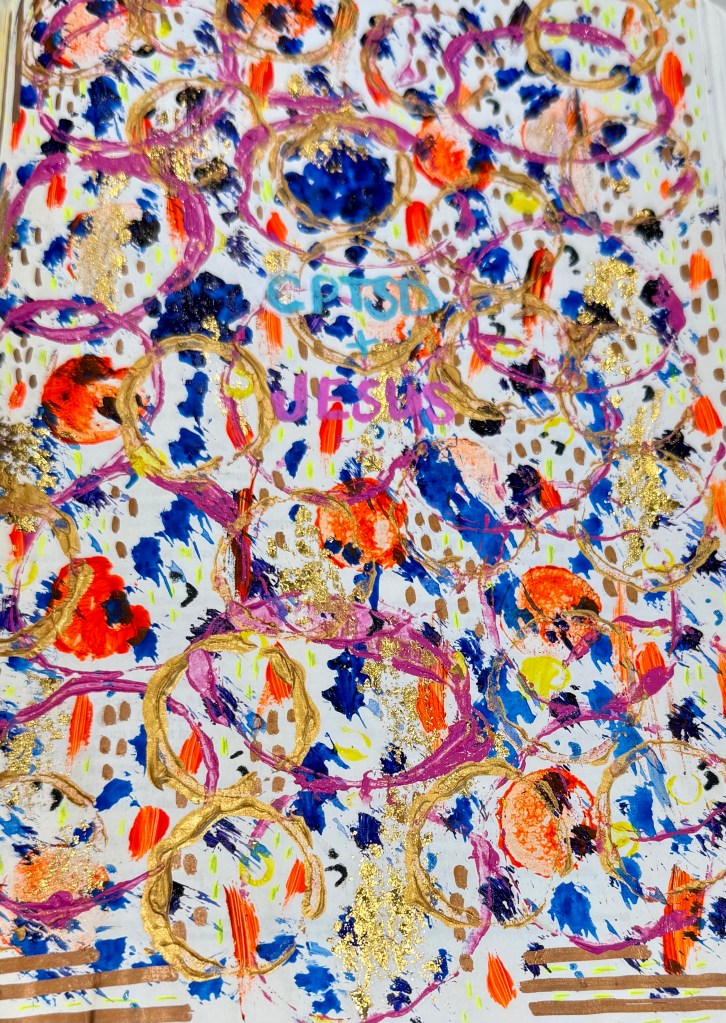
Some forms of collapse do not look like collapse.
This pattern is learned early, reinforced relationally, and can persist even under expert, trauma-informed clinical care. When masking becomes a condition of survival in childhood, it is not a strategy the nervous system can simply relinquish in adulthood—especially in gifted and neurodivergent individuals whose cognition, insight, and verbal fluency remain intact under extreme internal threat.
The fact that I am able to articulate this now should not be read as evidence of safety at the time.
By all clinical indicators, I should not be alive.
This image is the evidence of chronic, un-survivable collapse that remained unseen.
For nearly a decade, I lived in chronic suicidal collapse under severe spiritual predation while remaining articulate, functional, and outwardly stable. I continued to parent, believe, and speak coherently while existing at the edge of death. Multiple licensed, trauma-informed clinicians saw me regularly. None were negligent. And none could see the depth of collapse I had been trained since childhood to hide.
This is not an anomaly. It is a predictable outcome of long-term captivity combined with neurodivergent masking. When clinicians rely on articulation, insight, faith language, or apparent functioning as proxies for safety. Lethal collapse can remain invisible—even in plain sight.
Why This Is Often Missed in Neurodivergent Captivity Survivors
This image was created during active captivity.
It contains simultaneous indicators of attachment, faith coherence, emotional insight, and aesthetic organization alongside severe, ongoing suicidality and complex PTSD collapse.
For clinicians, this coexistence is often misread as stability.
In neurodivergent and gifted survivors of long-term captivity, collapse does not always present as disorganization, withdrawal, or visible despair. Instead, it frequently presents as:
- intact narrative coherence
- preserved relational language (including faith-based attachment)
- symbolic or artistic integration
- emotional articulation without visible dysregulation
These features are often interpreted as signs of resilience or recovery.
Clinically, this is a mistake.
What This Image Actually Reflects
This painting documents simultaneous system activation, not resolution.
From a trauma and neurodivergence-informed lens, it reflects:
- Persistent suicidal ideation embedded symbolically rather than verbally
- Saturated grief that has become somatically normalized
- Chronic threat activation masked by meaning-making and devotion
- Attachment to God functioning as a primary survival regulator, not evidence of safety
- Advanced masking developed through lifelong captivity and enforced self-containment
The presence of faith, beauty, or insight does not negate risk.
In fact, in captivity survivors, these may be protective adaptations that allow life-threatening collapse to remain unseen.
The Clinical Error This Reveals
Many assessment models implicitly rely on the assumption that:
- suicidality is loud,
- collapse is chaotic,
- and safety correlates with coherence.
For neurodivergent captivity survivors, the opposite is often true.
Collapse may be:
- quiet
- aesthetically organized
- relationally attuned
- spiritually articulated
This does not indicate low risk.
It indicates high-functioning survival under extreme internal load.
What Clinicians Are Being Asked to Notice
If you pass over this image because it appears expressive, connected, or “meaningful,” you are likely missing:
- concealed suicidal ideation
- dissociative endurance rather than regulation
- grief that has no exit pathway
- a nervous system sustaining life through extreme internal compression
In captivity survivors, especially those who are autistic, AuDHD, or gifted, masking is not behavioral—it is structural.
It is learned early.
It is reinforced relationally.
And it can persist even in expert clinical care.
Why This Matters
Failure to recognize this presentation is not neutral.
It contributes to:
- underestimation of risk
- inappropriate downgrading of care
- retraumatization through misattunement
- and, in some cases, preventable loss of life
This image is not art about collapse.
It is evidence of collapse that learned how to hide.
In captivity-trained nervous systems, distress is not expressed outwardly. It is concealed. This is not resilience, insight, or regulation—it is survival conditioning learned early and reinforced over time.
This phenomenon is especially pronounced in neurodivergent survivors.
What follows is a clear articulation of why this happens, and why it is so often missed, even by trained trauma professionals.
1. Early captivity trains invisibility, not expression
In captivity, symptoms are dangerous. Distress threatens the system. The nervous system learns to survive by suppressing outward signals of pain, fear, or overwhelm. Collapse becomes internalized.
2. Neurodivergence amplifies the masking capacity
In AuDHD and other neurodivergent survivors, cognition and language may remain intact while the body is in acute crisis. This creates a dangerous mismatch between presentation and internal state.
3. Captive masking can fool trauma-informed care
Most trauma models rely on visible dysregulation. Captivity survivors often present with calm affect, coherent speech, and insight—leading clinicians to underestimate risk.
4. Collapse appears “sudden” only because it was hidden
When severe collapse or suicidality emerges, it is often described as coming “out of nowhere.” In reality, it marks the point at which invisibility can no longer be maintained.
5. Masking is not consent, capacity, or stability
Apparent cooperation or calm does not equal safety. Silence does not equal consent. Insight does not equal nervous-system capacity.
6. This is structural, not personal
Captive masking is not dishonesty or denial. It is a learned survival adaptation shaped by environments where visibility was punished and concealment preserved life.
Why this matters
When collapse is trained to stay invisible:
- risk is underestimated
- survivors are misread
- retraumatization increases
- lives are lost
This is preventable harm.
Ethical implication
Resurrection-centered and captivity-informed ethics require this shift:
Safety cannot be assessed by presentation alone.
Some forms of collapse are trained to remain unseen.
They must be recognized.
What looks calm may be survival holding its breath.
How to Detect Risk When the Client Is Gifted, Neurodivergent, and Highly Articulate
The Core Principle (this matters most)
Articulation is not regulation.
Insight is not integration.
Calm is not capacity.
In gifted and neurodivergent captivity survivors, verbal fluency often outpaces nervous-system safety.
What Clinicians Commonly Miss—and What to Look for Instead
1. Coherence without relief
What is often misread:
The client explains trauma clearly, reflects insightfully, and tracks the conversation well.
What to assess instead:
- Does speaking bring relief or cost?
- Is there a visible drop in energy, warmth, or presence after insight?
- Does the body become flatter, colder, or more distant as articulation increases?
⚠️ High insight paired with post-session collapse is a red flag.
2. Gentle affect during severe content
What is often misread:
The client describes extreme events without visible distress.
What to assess instead:
- Is the tone consistently gentle even when content is catastrophic?
- Is there an absence of affective range rather than regulation?
- Does intensity feel contained rather than metabolized?
⚠️ Soft tone + severe content often signals trained concealment, not safety.
3. Insight without access to need
What is often misread:
The client understands patterns, names dynamics, and shows empathy.
What to assess instead:
- Can the client identify needs in the moment?
- Can they ask for help before collapse?
- Do they minimize or rationalize distress while naming it?
⚠️ Insight paired with inability to signal need indicates danger.
4. Functioning used as a proxy for stability
What is often misread:
The client is writing, working, parenting, or creating frameworks.
What to assess instead:
- Is functioning driven by urgency rather than choice?
- Is rest possible without anxiety or collapse?
- Does functioning stop abruptly during breaks or transitions?
⚠️ Sustained output can be a flight response, not wellness.
5. Absence of “typical” trauma signals
What is often misread:
No agitation, no emotional flooding, no behavioral dysregulation.
What to assess instead:
- Freeze responses (immobility, numbness, sudden exhaustion)
- Pre-verbal indicators: throat closing, vision narrowing, breath holding
- Reports of feeling “on fire,” “hollow,” or “about to disappear”
⚠️ These are collapse cues, not abstractions.
The Most Critical Question Clinicians Rarely Ask
Instead of:
“How distressed do you feel right now?”
Ask:
“What happens in your body after you leave this session?”
Post-session collapse, suicidality, or shutdown is one of the strongest indicators of invisible risk in this population.
Ethical Red Flags for Immediate Reassessment
A gifted or neurodivergent client is at high risk if they show:
- increased insight alongside worsening somatic symptoms
- calm presentation with escalating suicidality
- gratitude toward care that is actively destabilizing them
- fear of “being too much” while clearly unsafe
- loyalty to harmful systems despite insight
These are not compliance markers.
They are captivity adaptations.
Ethical Shift Required
For this population:
- Do not pace based on verbal capacity.
- Do not assume safety from insight.
- Do not escalate intensity because the client can “handle it.”
Instead:
- pace to the slowest signal in the body
- privilege collapse cues over cognition
- treat gentleness as a warning sign, not reassurance
One-Sentence Clinical Anchor (you can reuse this)
When a gifted or neurodivergent client remains articulate during collapse, safety must be assessed somatically—not verbally.
Why This Matters
Missing these signs doesn’t just delay healing.
It actively increases risk.
Many captivity survivors are harmed not because clinicians don’t care—
but because the wrong signals are being trusted.
Clinical Checklist
Assessing Risk When the Client Is Gifted, Neurodivergent, and Highly Articulate
Use this checklist when verbal insight, calm affect, or coherence appear to contradict somatic safety.
1. Presentation vs. Cost
☐ Client remains articulate while discussing severe or catastrophic material
☐ Language is coherent, reflective, and organized
☐ BUT articulation appears to cost energy rather than relieve distress
☐ Client reports exhaustion, shutdown, or collapse after sessions
Clinical note:
Articulation without relief is a risk indicator, not a strength marker.
2. Affect and Tone
☐ Tone remains gentle, flat, or softened during intense material
☐ Emotional range appears narrow rather than regulated
☐ Distress is described without visible affective engagement
☐ Calm feels held rather than metabolized
Clinical note:
Gentle affect during extreme content may indicate trained concealment.
3. Insight vs. Capacity
☐ Client demonstrates high insight into patterns, dynamics, and causes
☐ Client can explain trauma clearly
☐ BUT struggles to identify needs in real time
☐ Client minimizes distress while accurately naming it
Clinical note:
Insight does not equal nervous-system capacity.
4. Functioning Patterns
☐ Client maintains productivity, caregiving, or output during instability
☐ Functioning appears driven by urgency rather than choice
☐ Rest or pauses trigger anxiety, collapse, or suicidality
☐ Sudden shutdown occurs after periods of sustained output
Clinical note:
High functioning may be a flight response, not wellness.
5. Somatic and Pre-Verbal Indicators
☐ Reports of feeling “on fire,” “hollow,” “about to disappear,” or “not here”
☐ Throat tightening, breath holding, vision narrowing
☐ Sudden fatigue, numbness, or immobility
☐ Difficulty locating sensations without dissociation
Clinical note:
These are collapse cues, even when language remains intact.
6. Post-Session Risk (Critical)
☐ Client experiences worsening symptoms after sessions
☐ Reports of post-session suicidality or shutdown
☐ Increased dissociation or agitation following insight-oriented work
Clinical note:
Post-session collapse is one of the strongest indicators of invisible risk.
7. Loyalty and Compliance Signals
☐ Client expresses gratitude toward care that feels destabilizing
☐ Hesitates to express disagreement or distress
☐ Fears being “too much” or harming the therapeutic relationship
☐ Maintains attachment to harmful systems despite insight
Clinical note:
These are captivity adaptations, not consent or safety.
High-Risk Indicator
If three or more of the above categories are present, do not assume stability based on presentation alone.
Reassess pacing, intensity, and support immediately.
Ethical Guidance
- Do not pace treatment to verbal capacity
- Do not escalate depth because the client can “handle it” cognitively
- Do not use calm presentation as a proxy for safety
Instead:
- pace to the slowest somatic signal
- prioritize regulation over insight
- treat gentleness as a possible warning sign
Clinical Anchor
When a gifted or neurodivergent client remains articulate during collapse, safety must be assessed somatically—not verbally.
For those who wish to understand how faith functioned alongside—not instead of—clinical collapse, Invisible Collapse (Faith Frame) offers a parallel witness.
 Raya Faith | The Gentle Rise Survivor Sanctuary