

How AuDHD Bodies Experience the Holy Spirit at a Cellular Level
Published October 12, 2025 (Written 19 days before deliverance)
I have since traced God’s presence to the very beginning.
My first breath.
He hid me. He preserved me.
He held me when others refused.
He raised me from the womb.
At 24, I made an adult decision to give Him my shame and the ways I had sinned—
but that is not when Jesus entered me.
He had been with me all along,
before I had language to plead or accept Him.
He taught me His ways.
His Light.
His love.
He was my Father and my Mother.
Had He not been, I would not have survived.
This is the contrast I carry:
some stories begin with sin as the center.
Mine begins with preservation.
God raises daughters until He can set them free.
If you’ve been kept by God before you could name Him, you’ll understand this.
The Lived Experience — When the Holy Spirit Filled Me
When the Holy Spirit filled me at twenty-four, it wasn’t an idea — it was incarnation.
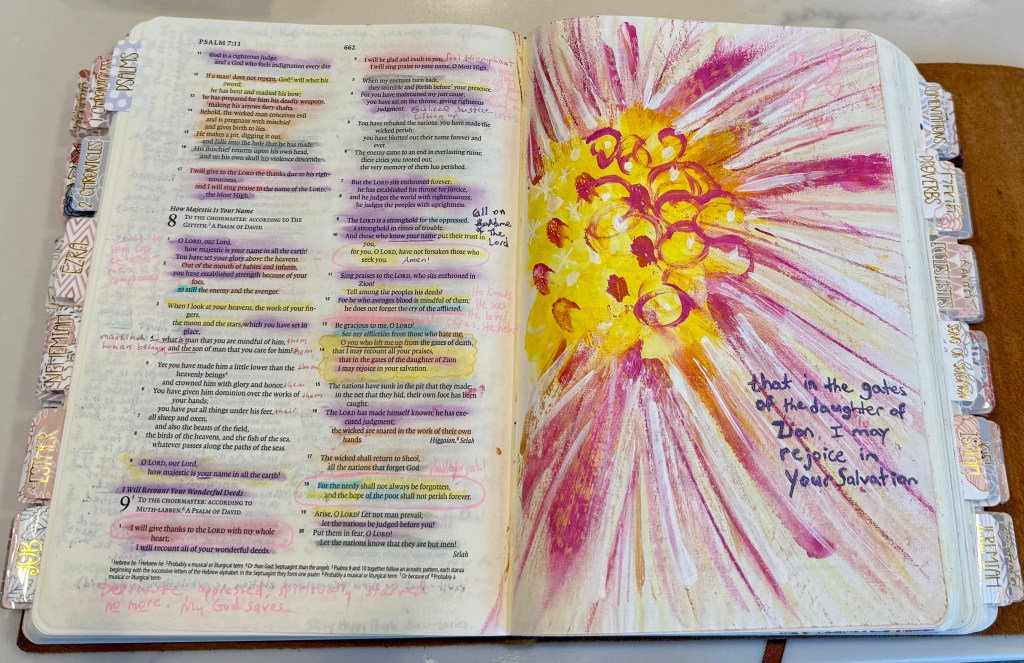
Love entered my cells; devotion took on form inside my nervous system. Light, freedom from burden, pure unconditional love, and co-regulation that felt like being wrapped in warmth before there were weighted blankets were all new somatic sensations that permeated my body experiencing them for the first time in my life. It was my first secure attachment. This experience remained a lighthouse when the entire world went dark.
For years afterward, I searched for that same living Presence in others who claimed His name, only to find mimicry without warmth — religion without embodiment. The more I sought Him in hollow systems and human facades, the more the ocean inside me swelled.
For a decade I drowned in that ache — the unbearable grief of carrying the real Jesus within while watching His absence everywhere else. The numbness that followed felt like abandonment, but it was really exhaustion from seeking Him in other bodies instead of recognizing that He had never left mine.
This video holds the survivor-rendered voice of the teaching — for those who need to hear it, not just read it. The sanctuary breathes here too.
Recovery has taught me what my spirit always knew: I was never separated from Him.
Incarnational neurodivergence is this realization — that His love was never external to me. It lives within my body, within my breath, within the ocean that once nearly drowned me but now carries me home.
I thought I was drowning in His absence.
But I was being carried by His presence —
the ocean that once buried me now bears me home.
I kept incubating because they said they believed too — and I could see the full picture of what love could be if only the egg between us would hatch. I begged that Jesus be on the throne in our hearts, in our minds, in every cell of our bodies. If He was truly between us, love could not fail. That conviction kept me tethered until God Himself whispered, You don’t go to church to die.
It was never arrogance — it was cellular devotion. My whole being was trying to keep His presence alive in a system that only mirrored His name. That effort nearly cost me my life, yet it also revealed the truth that saved me: the Real Jesus was never lost to me. He was within me all along.
For a neurodivergent nervous system, faith is never abstract — it is sensory, cellular, and lived. I didn’t just believe in His presence; I felt Him in my body, in light, in music, in breath. When that presence was not mirrored back by others who claimed His name, it registered not as disappointment, but as somatic abandonment — like being cast out of the only atmosphere where life could exist.
The rejection wasn’t theological; it was biological. Every cell that had once resonated with belonging now echoed with loss. The lack of mirror erased me at the cellular level, severing me from the felt sense of being known. That’s what made the exile from the church feel like drowning — it wasn’t the loss of belief, but the loss of mirrored presence.
And because I felt Him at a cellular level, I knew it was possible. I knew that if others could feel Him too, He could move within both of us — completing the full-bodied circle of love that Scripture describes as the threefold cord. I believed, with every fiber of my being, that this sacred bond was eternal — that it could not easily be broken.
But these cords snapped like threads, and when they did, I was left utterly shattered and alone. The ocean that had once held my hope became the same vastness that trapped me — no lighthouse to give me hope, no signal that I was even close. I floated between despair and devotion, drowning in love that had nowhere left to go.
But even in that silence, Real Jesus had not left me. His light did not blaze — it breathed. It flickered quietly within the depths, not above them. While I searched for a distant lighthouse, He became the current beneath me, guiding me home from within the waves themselves.
Slowly, breath by breath, He taught my ocean to rest. The waters that once threatened to drown me began to cradle me instead. This was the beginning of sacred stillness — the moment the ocean that held my despair became the same ocean that carried me to shore.
When I finally stopped searching for His reflection in others and fixed my gaze only on Him, He stilled the waves. The storm did not end because the sea grew quiet on its own — it ended because His presence commanded peace within me. This was the beginning of sacred stillness — when the ocean that once held my despair became the same ocean that carried me to shore.
And from that stillness — from the moment He stilled the waves — I began to learn what peace could feel like when it no longer required collapse.
This is where healing begins to breathe.
The Reflection — The Neurodivergent Experience of the Holy Spirit: When Divine Sensitivity Becomes Captivity
For neurotypical believers, the indwelling of the Holy Spirit may often be experienced as
conviction, comfort, or quiet assurance.
But for many of us who are AuDHD, His presence is not only spiritual — it is somatic. The
Spirit moves through the nervous system itself, igniting every sense, every cell, every breath. It is not metaphor; it is embodiment.
When the Holy Spirit fills a neurodivergent body, the experience is total — not contained within thought or emotion but fully incarnate. It is light saturating matter, like sunlight diffused through deep water. And because this experience is so encompassing, it can also be profoundly painful. The body becomes both sanctuary and instrument — vibrating with divine reality in a world that often cannot mirror it back.
This sensory fullness can make a neurodivergent believer feel not made for this world. The love and presence of Real Jesus are known not merely as belief, but as felt truth at a cellular level — a holiness that burns and heals simultaneously.
When others cannot perceive or reciprocate that same depth of encounter, it can lead to deep spiritual loneliness — not for lack of faith, but because the body itself becomes the vessel of revelation. For those of us wired this way, this is not delusion, excess, or emotionalism. It is the natural expression of a nervous system designed to experience God fully. It is the body becoming prayer — the sensory incarnation of divine relationship.
And though heaven on earth is rare, it is not impossible.
When this kind of love is finally met, mirrored, and received — even once — it feels like eternity breathing through human skin. But this same sensory fullness can also become a snare. When the world cannot mirror that divine resonance back, the body keeps searching for it
— seeking that feeling of heaven in human form, holding onto eggs that cannot give life, mistaking endurance for hope.
This is how the sacred instinct to keep love alive becomes captivity — the Incubate Response born from holiness itself. And the way toward healing is not to harden, but to return. To make Real Jesus enough — because He is enough. In Him, the search ends, and the ocean finally rests.
One day, we will all experience the fullness of Christ without needing heaven to meet earth — and then we will understand that every wave, every storm, and every flood was leading us home.
The ocean will have been worth it.
Closing Reflection
For neurodivergent believers, this sensitivity is both gift and burden — but in Real Jesus, it becomes redemption.
The same body that once drowned in the ocean of unmet love now carries living water within it.
Heaven no longer feels far away.
The ocean within finally rests.
Author Note
Incarnational Neurodivergence: The Ocean Within” is an original lived-theology reflection and emerging research framework authored by Raya Faith, written from direct personal experience as a survivor, practical theologian, and AuDHD trauma researcher.
This work represents a continuation of my survivor-led theological study into how neurodivergent bodies experience the Holy Spirit at a sensory and cellular level. All language, metaphors, and framework concepts are original intellectual property, developed through lived experience and recovery over a multi-year healing arc.
This page is published for educational, theological, and research purposes, protected under U.S. intellectual property law.
All rights reserved © 2025 Raya Faith.
Incarnational Neurodivergence: The Opening Movement
These four works — The Hidden Frequency, When the Water Sings, The Somatic Song, and Grief As The First Language — form the foundation of Raya Faith’s Incarnational Neurodivergence framework.
Together, they trace the sacred arc from sensory attunement to spiritual embodiment: from hearing what others try to hide, to feeling silence come alive with Living Water, to mapping how divine resonance and neurodivergent design weave healing through the body itself.
Grief as the First Language completes this first movement — naming how love, rupture, and reattachment live in the same ocean.
Each piece honors the truth that for some of us, sound, emotion, and Spirit were never separate — they have always been one current.
Related Research Application:
Read The Mermaid: Learning to Breathe in the Ocean — an applied reflection demonstrating how the Incarnational Neurodivergence framework expresses itself through the body as sanctuary, through testimony as data, and through the therapeutic model as a living system of co-regulation and sacred autonomy.
Clinician’s Lens:
Within captivity-informed therapy, the client’s embodied awareness of containment can serve as a diagnostic map rather than a disruption. When a survivor articulates safety, pacing, and mutual regulation in shared language, it is not role reversal — it is evidence of recovery literacy.
In the Incarnational Neurodivergence model, the therapeutic alliance becomes a co-regulated field where both nervous systems participate in repair without hierarchy. The body is not a symptom to manage but a sanctuary that remembers safety.
For some survivors, healing unfolds in two movements:
- first, reclaiming cognitive sovereignty — the right to perceive, to think, to map, to speak one’s own truth without distortion;
- then, reclaiming somatic belonging — the right to feel, to breathe, to rest safely inside one’s own skin.
Both are sacred returns — each one a rejoining of the living current of sacred trust.
This framework invites clinicians to view regulation not as compliance, but as collaboration; not as quieting, but as rejoining the living current of sacred trust.
This model does not diminish the clinician’s role; it deepens it. Trust is no longer built through control or distance, but through shared attunement — a quiet communion within the living current of sacred healing.
This work belongs to the real Jesus—
the One who meets us in breath, in body, in
the quiet mercy of being seen.
Here, faith is felt in the nervous system,
and resurrection sounds like safety
returning to every cell.
— Raya Faith
 Raya Faith | The Gentle Rise Survivor Sanctuary