

The Root of Religious Trauma: The Betrayal of Embodied Truth
Published October 12, 2025
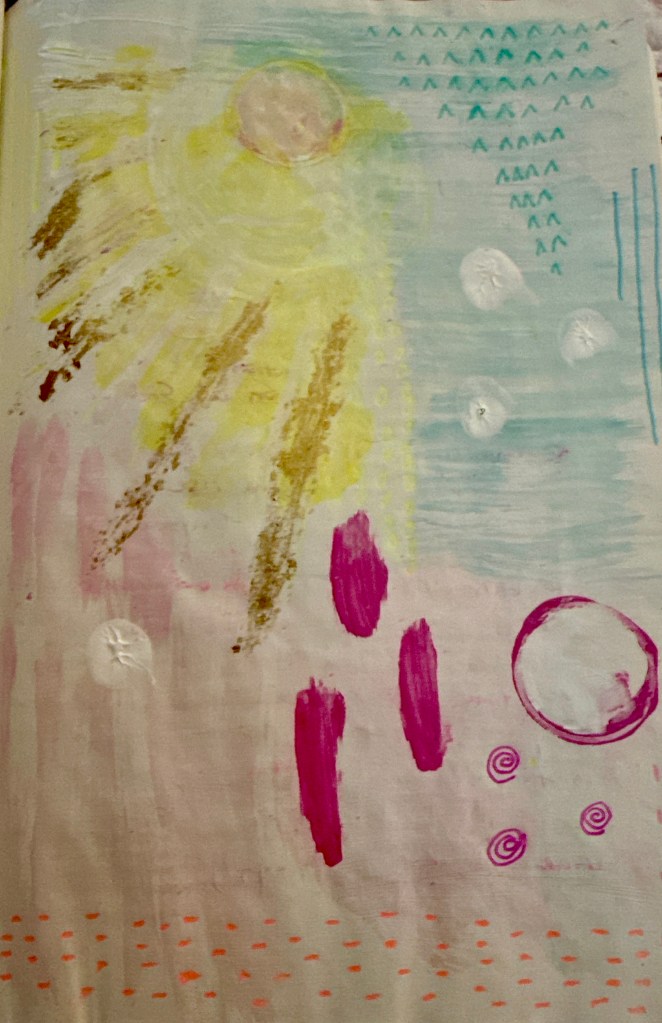
This page was written from collapse.
It was my first rudimentary attempt at coregulating—
a way to stay present long enough to name what my body was living.
At the time, I believed stability existed, even if I couldn’t reach it yet.
Resurrection and cellular theology had not entered my consciousness.
This was simply the language I had then—
offered from inside harm, while still tethered to it.
I measured that newfound stability in simple ways:
less suicidal ideation.
less dissociation.
I was still agoraphobic.
Still on fire in my own body.
Still tethered.
Still captive to triple invisible architectures I couldn’t yet name.
But because I had never tasted true freedom, even reprieve felt like mercy.
I gave God glory for this level of stabilization—
and for the neurodivergent therapist He gave me,
who helped hold my nervous system through Complex PTSD.
There are truths that live too deep for words—truths that pulse in the cells, in the breath, in the body’s quiet refusal to lie.
For many trauma survivors, especially those with AuDHD sensitivity, faith and the nervous system are not separate—they speak the same language. When the church silences the body’s witness, the soul begins to fracture. But when truth is finally allowed to live again in the body, healing becomes possible.
This is where my theology begins: at the meeting place of faith and physiology.
If you’ve ever felt like your very body bore witness to something others denied, this space is for you.
 Welcome to the sanctuary — where truth becomes breath, and breath becomes life.
For some of us—especially AuDHD survivors of religious trauma—truth is not an idea we hold. It’s a living current that moves through our bodies. Our cells remember what our minds tried to forget. When we encounter deception, distortion, or spiritual hypocrisy, it doesn’t simply offend our intellect—it floods our nervous system with warning light. Truth, for us, is cellular. To stay silent in the face of injustice is not neutrality; it feels like self-betrayal. The literal dying of Self at the cellular level. We speak because the body insists. The compulsion to name what is real is not rebellion—it is regulation. Our nervous systems were designed to expel distortion the way lungs cough out smoke. And yet, this same embodied truth often leads to exile, because the world prefers comfort over clarity. Others can look away; we cannot. Our bodies already know.
This is the hidden form of captivity for the truth-bearer: to carry what cannot be unseen or unfelt. But in time, what once felt like curse becomes calling. When Real Jesus enters the storm within us, the truth in our body becomes peace, and the flood becomes light.
At its core, religious trauma is not simply spiritual abuse — it’s the systematic betrayal of embodied truth.
When the nervous system registers harm, contradiction, or hypocrisy in a place that claims to represent God, the body cries out.
But religion, as system, often demands suppression in the name of submission.
So the survivor learns to silence their own inner witness — to deny what their cells know to be true.
This forced disconnection — between body and belief, sensation and Spirit — is the wound beneath all wounds.
The message is implicit but devastating: You cannot trust what lives in you.
For neurodivergent believers, this betrayal cuts even deeper.
Because our sensory systems are designed to feel truth fully,
we experience this split as existential violence — the death of internal safety.
The body becomes a battlefield between what is holy and what is demanded.
When religion denies the truth living in your very cells, it feels like death.
The body enters survival mode without reprieve—heart racing, breath shallow, Spirit silenced.
Because truth is not just an idea for the neurodivergent soul; it is a felt reality.
To deny that truth is to exile the Holy Spirit’s voice within—the One who speaks through the body itself.
This is why religious trauma doesn’t just wound belief; it fractures embodiment.
The nervous system learns to brace against its own knowing.
And yet, even there, Real Jesus whispers through the trembling:
You were never wrong to feel what was true.
But healing begins when that truth is allowed to live again in the body.
When we no longer exile our own knowing,
and we realize that the voice of Real Jesus is not thundering from pulpits
but whispering through the very cells that refused to lie.
You are safe with Jesus. Seen by Jesus. And deeply loved by Jesus.
When Truth Lives in the Body
For AuDHD survivors, the compulsion to speak truth is not rebellion — it is survival.
Our bodies are wired to register dissonance at a cellular level. When falseness is present, the nervous system floods because truth itself is oxygen. To remain silent under distortion is to suffocate in plain air.
The body begins to shut down, interpreting the suppression of truth as an existential threat.
This leads to chronic collapse, erasure, and — in severe cases — suicidal ideation as the body seeks escape from what feels like cellular death. Complex PTSD is not only in the mind; it is felt in every cell, in every circuit. It is a full-body expression of systemic flooding, where the soul’s longing for truth becomes the body’s desperate cry for air.
This is why religious trauma feels existential and annihilating — because it violates not only belief, but the body’s deepest covenant with truth. When spiritual harm forces silence, the body interprets it as exile from life itself.
To speak truth, then, is not a moral act — it is a biological act of resurrection. When integrity returns, the body begins to breathe again. Voice becomes breath. Breath becomes life. And the ocean within finally stills. And yet, for many of us, the call to truth becomes the ache of waiting — waiting for others to see, to awaken, to repair what has already been revealed in our bodies.
The Somatic Paralysis of Waiting
What looks like “freeze” in many AuDHD survivors is not absence — it is sacred endurance.
When the body fuses truth with love, it waits in stillness, believing repair will come when others finally see what the survivor has carried all along.
This paralysis is not weakness; it is the nervous system holding vigil for truth — the Incubate Response made visible.
It is love refusing to die, even when unseen.
It is not codependency.
It is what happens when Christ-level love and devotion live inside a nervous system wired for depth.
To the world, it looks irrational — love that endures too long, hope that waits beyond reason.
But for the AuDHD survivor, it is not blindness; it is embodied faithfulness — the echo of divine attachment still pulsing through the cells, even when every external bond has broken.
This is not the sickness of codependency; it is the sacred physiology of devotion.
To release this hold is to finally see the false egg for what it is — not a covenant of life, but a vessel of depletion.
In that moment, devotion turns homeward — to Real Jesus only, and to the tender work of self-preservation that becomes somatic restoration.
The love that once kept us captive is reclaimed as the love that sets us free.
The Embodiment of Freedom
When Real Jesus said, “The truth will set you free,” He was speaking to more than the soul — He was speaking to the body.
Each time we name what was once exiled, our cells begin to exhale.
Truth doesn’t just bring understanding; it brings regulation.
This is somatic repair in real time — surgical precision in the naming of truth held in the cells, where the nervous system remembers what it feels like to be safe in truth, to live where nothing has to hide.
This is what we do in the online sanctuary- name wounds so we can be set free.
Visit us there for our healing Tending Wounds Tuesday series. https://www.youtube.com/@rayafaithwriter
With Love,
Raya

Author’s Note:
This framework was not conceived in theory but discovered through embodiment.
It emerged from lived experience — from the intersection of AuDHD neurodivergence, severe complex trauma, and enduring faith in the Real Jesus.
What began as survival became revelation; what began in silence became language.
This work stands as both witness and offering — a map written by the body, refined by devotion, and returned in hope that others might find their way home too.
It is a Truth no one can again take from my cells.
Related Work
Emerging theological and clinical research has begun exploring the intersection of neurodiversity, embodiment, and faith, including Neurodiversity, Faith Formation, and Theological Education (Cartledge & Raffety, 2023) and the Theology and Neurodiversity Project (2024). Early writings in neurodivergent liberation theology and in embodied-faith education describe worship and learning as bodily experiences, yet they rarely address the cellular dimension of knowing or the trauma of having that somatic truth denied. Current therapeutic literature on autistic and ADHD embodiment highlights sensory flooding and masking within religious environments but does not integrate those findings into a theological frame.
Raya Faith’s concept of “cellular truth” and “incarnational neurodivergence” extends this conversation by linking AuDHD dual wiring—autistic stillness and ADHD motion—to embodied faith regulation under religious trauma. In doing so, it offers one of the first survivor-led frameworks where theology, neurobiology, and trauma repair converge within a lived-experience model.
This reflection is part of my living theology — where the body, faith, and healing speak the same language.
Learn more about Raya Faith’s original AuDHD Fifth Trauma response, The Incubate Response, here.
Learn more about Raya Faith’s original Incarnational Neurodivergence, a lived practical theology here.
 Raya Faith | The Gentle Rise Survivor Sanctuary